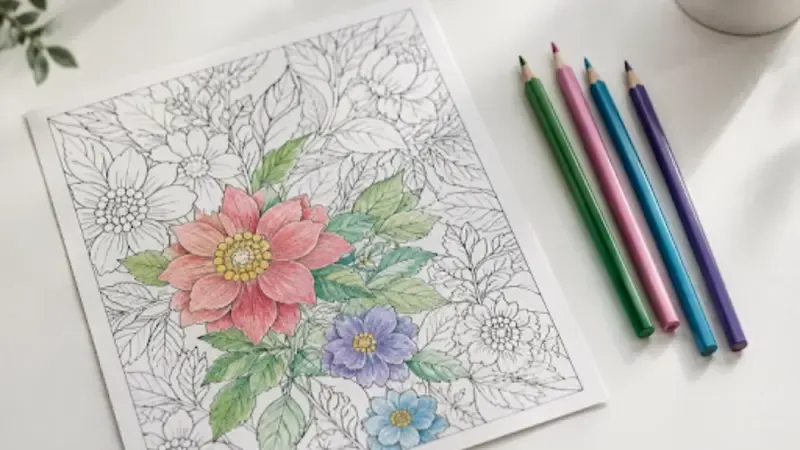
Busy days often leave little room to pause. A short coloring session can offer a simple alternative to refreshing a news feed, answering one more email, or moving straight to the next responsibility. It does not require artistic experience, a perfect plan, or a large block of free time.
For many people, the value is in the structure: choose a few colors, focus on one small area, and let the page develop gradually. Coloring is not a cure for stress or a substitute for health care, but it can be a pleasant, low-pressure way to ease the transition into a full day.
Why Coloring Can Feel Calming
Coloring gives the hands and attention a clear, contained task. Repeated pencil or marker movements can create a steady rhythm, while selecting colors and gently filling shapes narrow the number of choices competing for attention. Instead of trying to solve every problem at once, a person only needs to decide what color belongs in the next space.
That simplicity makes coloring approachable for people who do not consider themselves artists. There is no need to draw from scratch or make a finished page look impressive. After work, for example, spending 10 minutes with a simple design may feel more restorative than immediately scrolling through stressful headlines or notifications.
What Current Research Says
Research on coloring is promising, but it should be interpreted carefully. A 2026 review of 17 studies involving 987 hospitalized adults found that mandala coloring was associated with lower anxiety and stress scores. The authors also rated the overall certainty of the evidence as low, indicating that stronger studies are still needed before broad clinical conclusions can be drawn. Readers who want the details can review the meta-analysis of mandala coloring in hospitalized adults.
In daily life, the most reasonable expectation is modest and personal: coloring may help some people settle into a quieter moment or step away from a stressful loop of thoughts. It will not feel equally useful to everyone, and it should not be treated as medical care for anxiety, depression, or another health condition.
Choosing The Right Coloring Format
The best format is usually the one that feels easy to begin. Consider these options:
- Paper pages: A hands-on choice that keeps the activity away from screens.
- Digital coloring: Convenient for travel, limited storage, or people who already use a tablet.
- Large designs: Often easier for beginners or anyone who finds small spaces tiring.
- Detailed designs: A fit for people who enjoy longer, quieter sessions and close visual focus.
- Open drawing: A flexible option for anyone who prefers making their own marks instead of following outlines.
How To Build A Simple Coloring Routine
A helpful routine does not need special supplies. A printed page, a few pencils or markers, and a timer are enough. Try this uncomplicated process:
- Choose a comfortable spot with enough light to see the page easily.
- Set aside 10 to 20 minutes.
- Silence the phone or place it beyond reach.
- Select three to five colors before starting.
- Color at an unhurried pace rather than aiming to complete the page.
- Stop when the timer ends, even if part of the design remains blank.
Stopping before the page is finished can be useful. It keeps the activity small enough to repeat and removes the pressure to turn one quiet break into a project.
Using Coloring To Reset Attention
A brief creative pause can also mark the end of one task and the beginning of another. Try coloring before homework, after a long meeting, or during an afternoon energy dip. A timer gives the break a boundary, so it is less likely to become another distraction.
Some people prefer silence. Others like soft music or a seat near natural light. The benefit, if it happens, may come from having one limited activity to attend to for a few minutes. That is different from promising that coloring will improve concentration for every person in every situation.
How To Keep The Activity Relaxing
Coloring works best as a break, not a performance test. There is no correct color scheme, and unfinished pages, uneven lines, and repeated colors are all normal. Expensive supplies are optional, not required.
Choose bright colors when you want the page to feel lively, or use softer shades for a slower evening session. If choosing colors becomes stressful, limit yourself to two or three. Fewer decisions can make it easier to stay present with the activity.
Coloring For Different Age Groups
Coloring can be adapted to many ages and comfort levels. Children may use it for quiet play and practice handling crayons or pencils. Teens may appreciate a screen-free break between study sessions. Adults can fit a page into a transition between work, errands, and family responsibilities.
For older adults, large shapes, high-contrast outlines, comfortable grips, and shorter sessions may be more practical than highly detailed pages. In each age group, adjust the page size, tool type, and session length to suit vision, hand comfort, attention span, and personal interest.
Common Questions About Coloring
How Long Should A Coloring Session Last?
Start with 10 minutes. Continue longer only if it remains enjoyable. A short session that fits naturally into a routine can be more sustainable than an occasional hour-long one.
Does Coloring Count As Meditation?
Coloring can involve mindful attention because it brings focus to color, movement, and the page in front of you. It is not the same as formal meditation, though, and it does not need to be called meditation to be worthwhile.
Is Digital Coloring As Helpful As Paper Coloring?
Either format can be a reasonable choice. Paper may feel more tactile, while digital coloring may be easier to carry and restart. Comfort and preference matter more than choosing the “right” format.
What If Coloring Feels Frustrating?
Switch to larger shapes, fewer colors, or a shorter timer. If it still feels like a chore, choose another low-pressure activity instead. A calming hobby should not create another standard to meet.
Can Coloring Replace Mental Health Care?
No. Coloring can be a leisure activity and a personal coping tool, but persistent or worsening symptoms deserve professional mental health support. Therapy, medication, and other care options may be appropriate based on a person’s needs.
A Simple Creative Pause
Coloring does not need to produce a perfect picture to be useful. A few quiet minutes, a small set of colors, and a clear page can create a gentle change of pace. In 2026, that simple creative pause remains an accessible way to make a little more room for calm and focus.