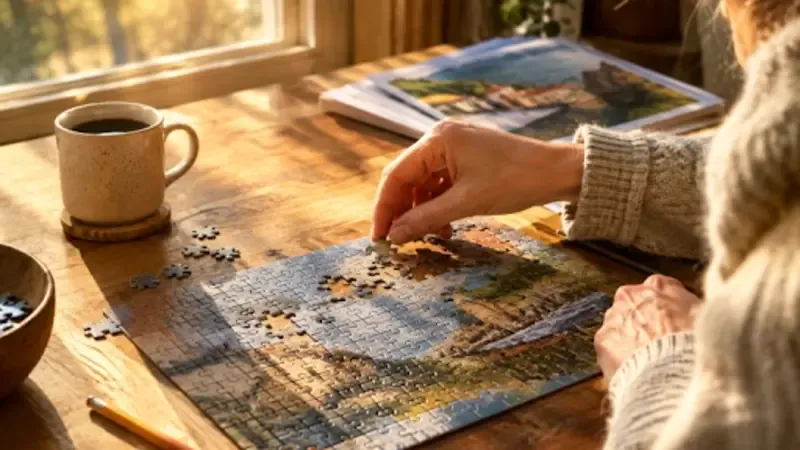
Puzzle activities can provide a small, satisfying break from a busy day. Whether the goal is quiet focus, a shared family activity, or a quick mental challenge between tasks, the best option is usually one that feels inviting rather than intimidating. For a range of formats that can suit different moods and skill levels, check here before deciding what to try next.
The value of puzzle time is not limited to finishing quickly or choosing the hardest challenge available. A good puzzle gives the solver a reason to pay attention, test an idea, and enjoy making progress. It can also create a screen-free pause or an easy way to start a conversation with another person.
Why Puzzles Still Fit Modern Life
Many hobbies require equipment, planning, travel, or a large block of free time. Puzzles can be more flexible. A word clue, number grid, visual challenge, or trivia question may fit into a few quiet minutes, while a larger activity can fit into a relaxed evening. That flexibility makes puzzles useful for people who want a hobby that can expand or shrink around their schedule.
Puzzles can also be social without becoming complicated. Two people can compare answers, work through a difficult clue, or divide parts of a larger challenge. This kind of shared problem-solving gives people something concrete to discuss, which can be especially helpful when family members have different ages or interests.
It is important to keep the benefits in perspective. Puzzles may be an enjoyable form of mental engagement, but they are not a medical treatment or a guaranteed way to prevent cognitive decline. The National Institute on Aging notes that evidence for lasting cognitive benefits from mentally stimulating activities remains inconclusive, and that a balanced routine also includes physical activity, sleep, social connection, and other healthy habits.
Choose By Goal, Not By Hype
Start by asking what you want from today’s activity. A puzzle that suits one situation may be a poor fit for another.
- For a calm break: Choose familiar rules, a comfortable difficulty level, and a format that does not require rushing.
- For a mental challenge: Pick an activity that uses deduction, memory, vocabulary, calculation, or pattern recognition.
- For family time: Look for flexible rules, clear turn-taking, and opportunities for people to help one another.
- For a short daily habit: Select a puzzle that can reasonably be completed in a few minutes.
- For learning: Choose activities that invite practice with words, numbers, logic, or general knowledge.
A puzzle does not need to be difficult to be worthwhile. If the purpose is to decompress after work, a familiar word game may be a better choice than a demanding logic challenge. If the purpose is to stretch your attention, increase the complexity gradually rather than jumping straight to the most advanced version.
Match The Activity To The Solver
The most enjoyable challenge usually sits between boredom and frustration. Before beginning, consider whether the directions are clear, whether the activity has examples or hints, and whether the expected time commitment fits the moment.
- Begin with a format whose basic rules are easy to understand.
- Choose a moderate level of difficulty for a first attempt.
- Use hints or answer checks as tools, not as signs of failure.
- Increase difficulty after the format begins to feel familiar.
- Switch activities if the challenge consistently feels discouraging.
Children often benefit from shorter rounds, larger print, and clues connected to what they already know. Beginners may prefer puzzles with examples and obvious starting points. Experienced solvers may enjoy tighter rules or fewer hints. For older adults or anyone managing changes in vision, dexterity, or concentration, comfort features such as readable type, strong contrast, and enough writing space can matter as much as the puzzle itself.
Puzzle Types And The Skills They Use
Different puzzle types ask the mind to work in different ways. There is no universal best choice, so variety can keep the experience fresh.
- Word-based activities: These can involve spelling, recall, vocabulary, definitions, and associations between ideas.
- Number-based activities: These often use calculation, sequences, and step-by-step reasoning.
- Logic activities: These focus on rules, deduction, and eliminating possibilities.
- Pattern activities: These ask solvers to notice repeated shapes, visual relationships, or changes in a sequence.
- Trivia activities combine general knowledge, conversation, and memory.
- Picture-based activities: These offer visual problem-solving and can work particularly well when several people are participating.
How To Make Puzzle Time Work For Families
Family puzzle time works best when nobody feels tested or excluded. A short after-dinner activity can be more successful than a large project that requires everyone to stay engaged for hours. Let each person choose a category or round, and consider teams when ages or experience levels vary.
Give younger participants clues they can reasonably approach, but avoid making the help feel like a consolation prize. Encourage people to explain their thinking before finalizing an answer. Mistakes are part of the activity, and a light response keeps the focus on curiosity instead of competition. Timers can add energy for some groups, but they are optional, not required.
How To Build A Simple Puzzle Routine
A routine does not need to be strict to be useful. Choose a regular moment, such as a morning coffee break, lunch period, or quiet time before bed. Aim for one page, one round, or about ten minutes. Rotate formats throughout the week so the routine does not become repetitive.
Pay attention to both enjoyment and difficulty. If a puzzle leaves you interested in returning tomorrow, it is likely a better fit than one that feels like another obligation. Stop while attention is still available, especially when the goal is relaxation.
Ways To Prevent Frustration
- Read the instructions before making assumptions about the rules.
- Take a brief break when concentration drops.
- Use a hint instead of making repeated random guesses.
- Change formats when an activity feels overly repetitive.
- Measure success by progress, insight, and enjoyment, not speed alone.
- Celebrate teamwork and clever approaches, even if the final answer takes time.
Digital Or Print: Which Format Fits Best?
Digital and print puzzles can both work well. The better choice depends on where, when, and how someone prefers to solve.
- Digital formats: Often convenient for travel and short breaks. They may offer features such as adjustable text, built-in hints, timers, and easy answer checking.
- Print formats: Easy to share around a table, mark with a pencil, and use during screen-free time. Many people also prefer the physical act of circling, crossing out, and writing notes.
Accessibility should guide the decision. Consider font size, contrast, touch controls, screen glare, writing space, and whether a person is more comfortable using a pencil or a device.
Common Questions About Puzzle Activities
How Long Should A Puzzle Session Last?
There is no ideal length for everyone. A five-minute activity can be enough for a busy day, while a longer session may suit a weekend, a commute, or a family gathering.
Are Puzzles Good For Children?
Age-appropriate puzzles can give children practice with skills such as counting, language, patience, and turn-taking. The key is to offer enough support so the activity remains achievable and enjoyable.
Can Puzzles Replace Exercise Or Sleep?
No. Puzzles can be one enjoyable part of a balanced routine, but they do not replace movement, rest, nutritious food, health care, or meaningful social contact.
Is It Better To Solve Alone Or With Others?
Both approaches have value. Solo solving can support quiet focus, while group solving adds conversation, collaboration, and the fun of seeing how others think.
A Better Way To Choose
The best puzzle activity is the one you will want to return to. Choose based on your interests, available time, preferred level of challenge, and whether you want a solo reset or shared fun. In 2026, puzzle time can stay simple, flexible, and personal. It can be a small moment of focus, a family laugh, or a satisfying reminder that steady progress counts.